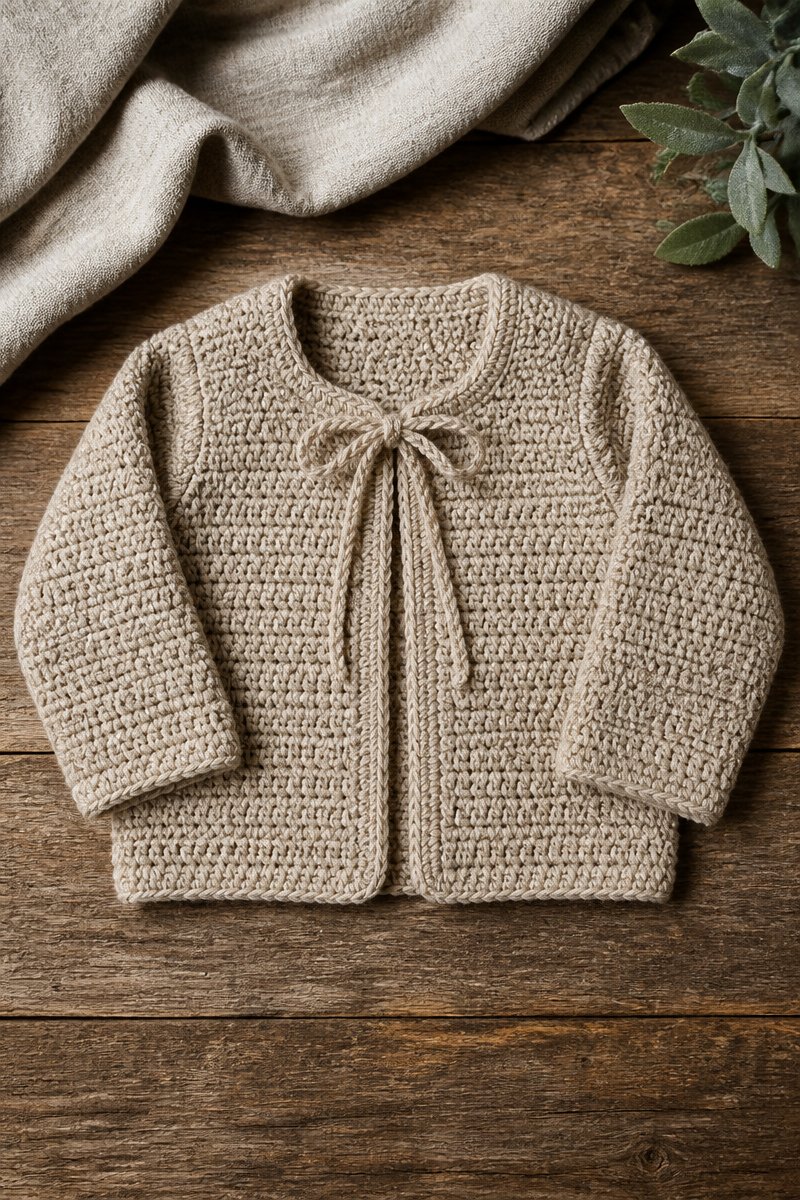
This baby cardigan offers a clean, structured silhouette built from flat panels joined with minimal shaping, relying on half double crochet for a soft, sturdy fabric. Its straightforward construction means less guesswork while working it up, making it approachable for intermediate crocheters ready to move beyond simple squares but not looking for complex shaping.
The choice of a worsted weight acrylic-cotton blend at a US H/8 (5mm) hook strikes a balance between durability, softness, and ease of care—ideal for a fall garment that can be machine washed yet feels gentle on baby’s skin. The oatmeal heather base color lends a subtle, natural tone that complements fall wardrobes and is less prone to noticeable wear or staining than lighter shades might be.
Unlike typical baby cardigans that use buttons, this design employs crocheted ties to close the front safely, reducing choking hazards without sacrificing style. Its slightly tapered sleeves add a hint of tailoring and prevent the garment from hanging loosely over baby’s small shoulders, which helps maintain warmth.
Why You’ll Love This Cardigan
Its flat-piece construction in hdc stitch makes it quick to work, with no complex increases or shaping aside from sleeve edges. The acrylic-cotton blend yarn is breathable and machine washable, perfect for fall when layering is key. The ties eliminate fiddly buttons, providing secure closure while still allowing easy on/off. Overall, it’s a balanced beginner-friendly cardigan with just enough shaping and finishing for clean lines and good fit.
Materials
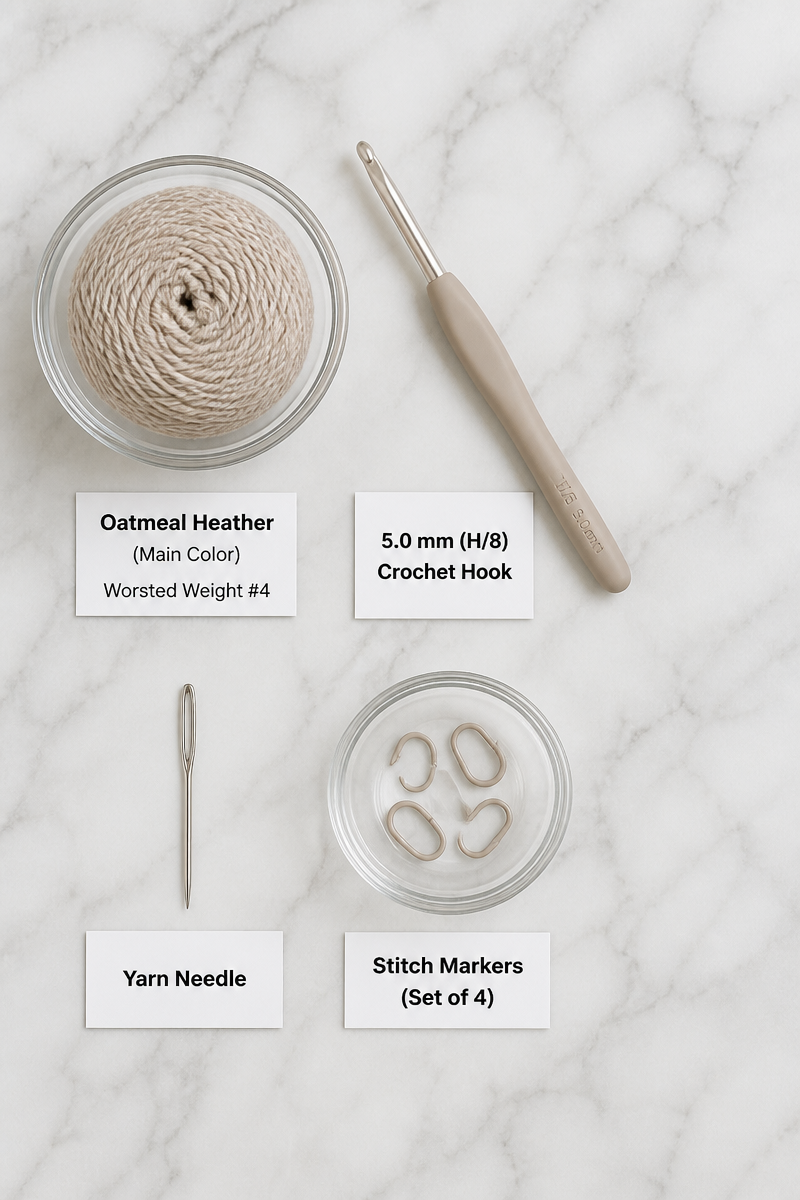
- Hook: US H/8 (5mm) crochet hook
- Yarn: Worsted weight (#4) acrylic-cotton blend, oatmeal heather, approximately 350g/700 yards total
- Notions: Yarn needle, 4 stitch markers
Gauge
14 sts x 16 rows = 4 x 4 inches (10 x 10 cm) in half double crochet (hdc) stitch, worked flat.
Finished Size
Chest circumference: 20 inches
Body length (shoulder to hem): 10 inches
Sleeve length (shoulder seam to cuff): 6 inches
Fits babies aged 6–12 months
Special Stitches and Techniques
- Half Double Crochet (hdc): Yarn over, insert hook into stitch, yarn over, pull up a loop, yarn over, pull through all three loops on hook.
- Slip Stitch (sl st): Insert hook into stitch, yarn over, pull yarn through stitch and loop on hook in one motion (used to join rounds and for finishing edges).
- Chains (ch): Basic foundation stitch used to start rows or rounds.
- No other specialized stitches are required.
Abbreviations
- ch = chain
- hdc = half double crochet
- sc = single crochet
- sl st = slip stitch
- st(s) = stitch(es)
- rnd = round
- RS = right side
- WS = wrong side
Acrylic-Cotton Blend Tips
This acrylic-cotton yarn works smoothly on a 5mm hook with a slight glide that keeps tension even. Because of the cotton content, tight stitches may make the fabric stiff, so relax tension slightly for softness without gaps. This blend generally blocks well; you can gently steam or pin the finished garment to shape and smooth it, which aids in even edges and a polished fit. It is less prone to pilling than pure acrylic but still durable enough for frequent machine washing. Avoid high heat drying to preserve yarn integrity over time.
Options for Substitutions
- Substitute a 100% worsted acrylic for more elasticity, but stitch tension may change; adjust hook size accordingly.
- Use a cotton-rich blend with a tighter twist for a cooler, more breathable fall garment, mindful of potential stiffness.
- For a softer hand, a wool-acrylic blend works but requires hand washing to avoid felting.
- Try a 5.5 mm hook for a looser gauge and slightly bigger size; reduce stitch counts with careful swatching.
- Choose a heather or tonal colorway with subtle variegation to add texture interest without complicating the clean lines.
- Use sport weight yarn with a smaller hook and adjusted stitch count for a lighter cardigan; recalculate foundation chains and row numbers to match gauge.
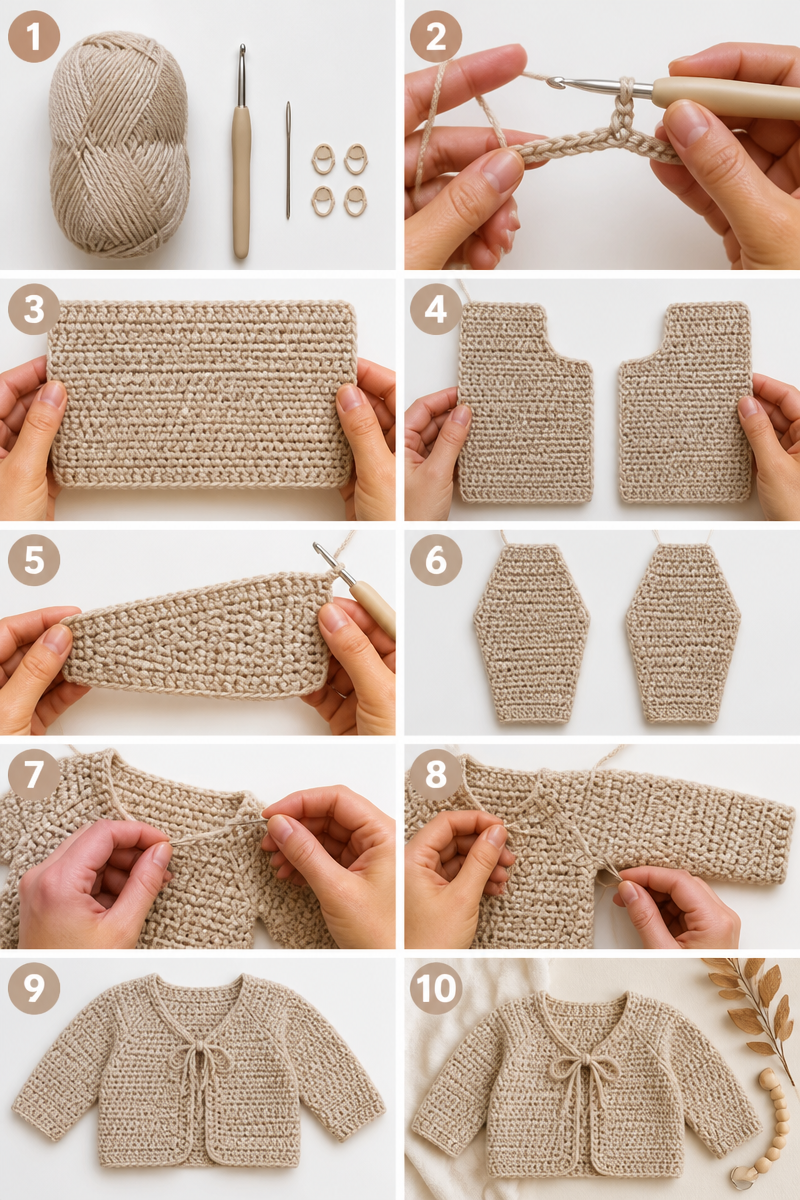
Baby Cardigan Pattern
Back Panel (make 1)
Ch 37.
Row 1: Hdc in 3rd ch from hook and each ch across (35 sts).
Rows 2–40: Ch 2 (does not count as st), turn, hdc in each st across (35 sts).
Fasten off. Total height approximately 10 inches.
Front Panels (make 2, mirrored)
Ch 19.
Row 1: Hdc in 3rd ch from hook and across (17 sts).
Rows 2–40: Ch 2, turn, hdc in each st across (17 sts).
Fasten off. Height matches back, about 10 inches. Panels mirror so ties align properly.
Sleeves (make 2)
Ch 17.
Row 1: Hdc in 3rd ch from hook and across (15 sts).
Rows 2–24: Ch 2, turn, hdc across, increasing 1 st each end on Rows 6, 12, 18, and 24 (total 23 sts after last increase).
Sleeve length reaches 6 inches.
Fasten off.
Neckband
Join yarn at right front neck edge.
Rnd 1: Ch 1, sc evenly around neckline, down right front edge, across hem (bottom edge of cardigan), and up left front edge, working 3 sc at each corner to keep corners flat. Join with sl st to first sc. Fasten off.
Ties
Join yarn at right front neck edge.
Ch 14, then sl st back through each ch to base. Fasten off securely.
Repeat on left front neck edge. Weave in ends firmly to prevent detachment.
Assembly
- Sew shoulder seams, joining front panels to back panel, 3 inches each side from shoulder top.
- Sew side seams from bottom edge up 6 inches, leaving armhole openings clear.
- Sew sleeve seams along length.
- Set sleeves into armholes, matching sleeve center row (Row 12) to shoulder seam for balanced fit.
- Weave in all ends. Block garment to measurements, gently shaping armhole curves and body edges.
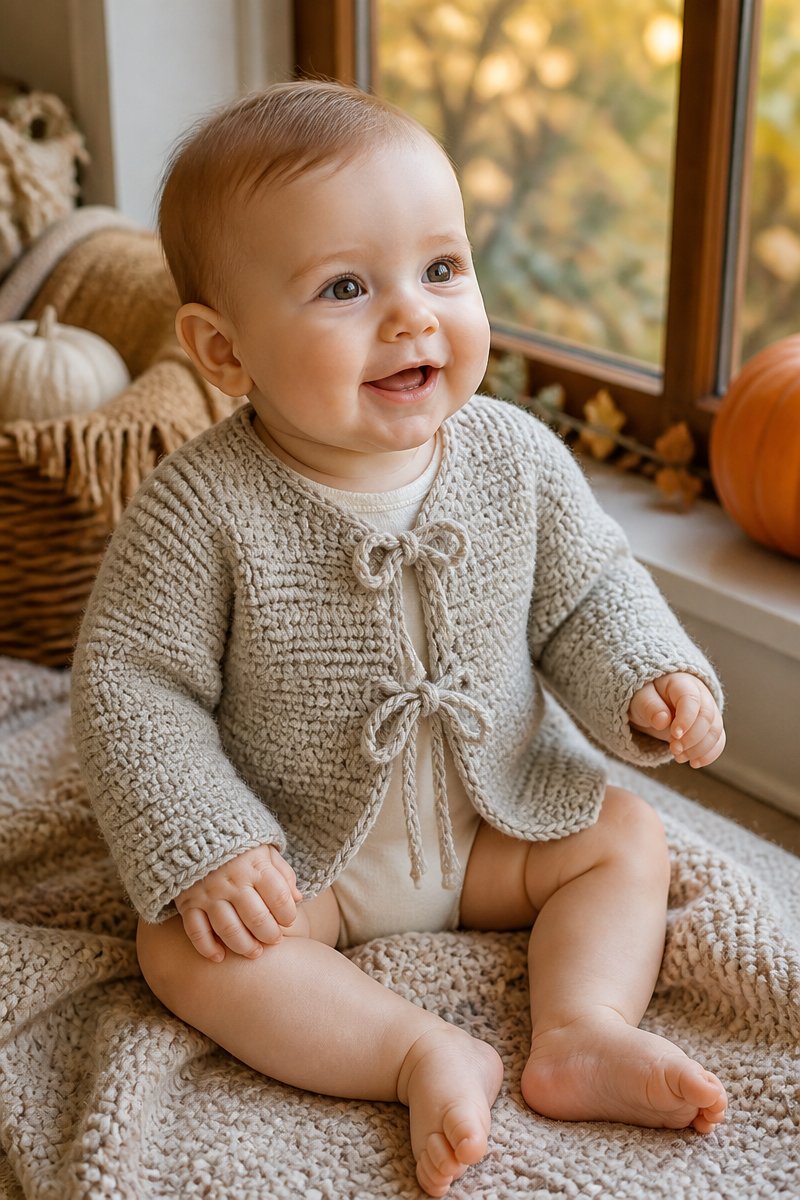
Watch Out for These Mistakes
A common misstep is neglecting the increases on the sleeves. The increases at Rows 6, 12, 18, and 24 add critical width for a comfortable fit and tapering shape. Skipping or miscounting an increase row will cause the sleeve to be too narrow or misshapen.
When sewing the shoulder seams, double-check the 3-inch distance from the shoulder edge to ensure the front panels align perfectly with the back. An uneven seam here will cause shoulder puckering.
The neckband requires 3 single crochets at each corner. Missing those extra corner stitches can cause the neckline to ripple or pucker instead of lying flat.
Weaving in the ties securely is vital. Loose ends at the tie bases can lead to detachment, risking safety and wear.
Care and Washing Instructions
Machine wash cold on gentle cycle. Use mild detergent. Avoid bleach or fabric softeners to preserve yarn and color integrity. Reshape and lay flat to dry or dry inside out on low heat setting. Light steaming during blocking restores the shape after washing. Avoid high-heat drying to prevent yarn deformation or shrinkage.
Questions About Making This Cardigan
Q: Can I make this cardigan larger or smaller?
A: Yes, but you must adjust foundation chains proportionally to gauge and keep stitch counts divisible by the pattern’s stitch multiples. Swatch to confirm gauge first.
Q: What skill level is needed?
A: Intermediate beginner. Basic knowledge of hdc and standard crochet shaping plus sewing pieces together is required.
Q: Can I substitute buttons instead of ties?
A: Yes. Attach four buttons evenly spaced on one front panel edge, and sew corresponding buttonholes or leave gaps on the other panel. Ensure button size is baby-safe.
Q: How should I block this cardigan?
A: Pin edges to measurements on a blocking board or towel, use light misting or gentle steam, and let dry flat.
Q: Is the stitch count on the front panels mirrored exactly?
A: Yes, each front panel uses 17 stitches across 40 rows. The panels are mirror images for balanced shaping and tie placement.
Q: Can I use a different stitch pattern?
A: Replacing hdc with a patterned stitch would require recalculating gauge and possibly adjusting stitch counts to maintain fit.
Q: What if my yarn has a slightly different gauge?
A: Adjust chain length and row count to maintain proportionate chest circumference and length, testing with a gauge swatch.
This cardigan offers a functional and attractive layering option for fall with ease of construction and wear. Share your finished pieces and feedback to help refine future designs.