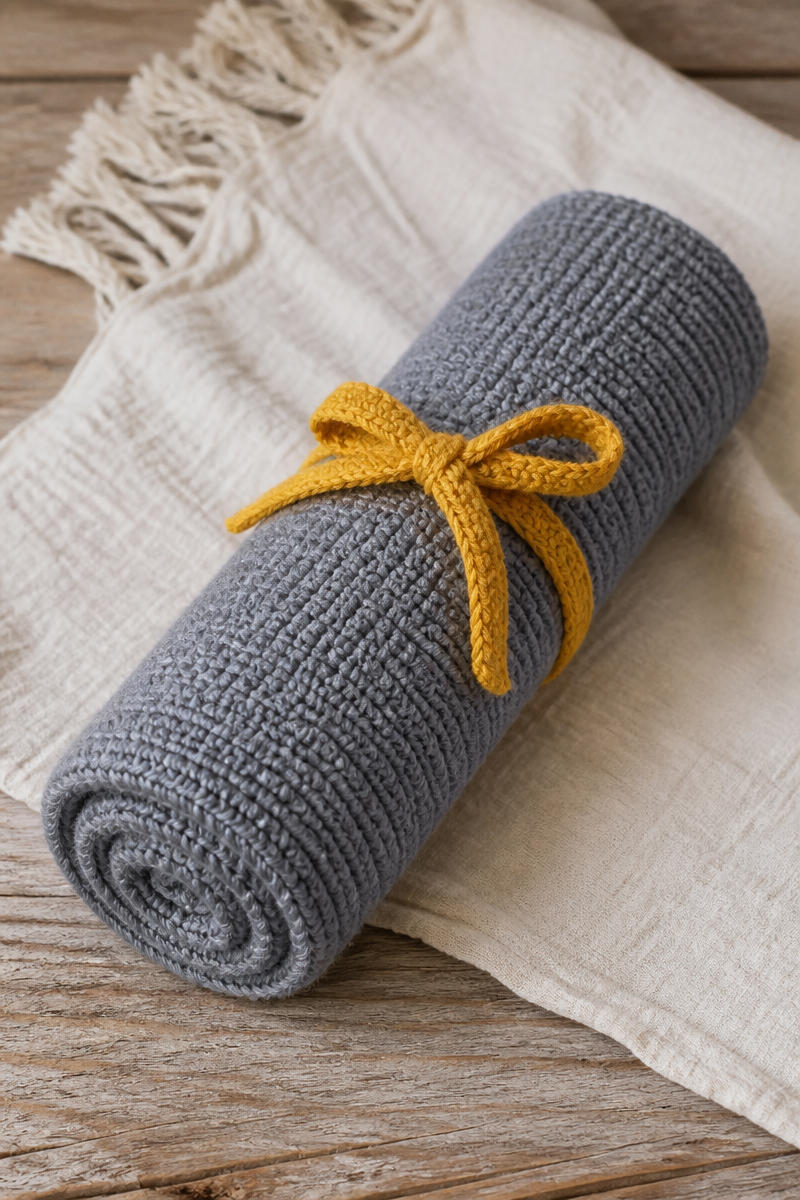
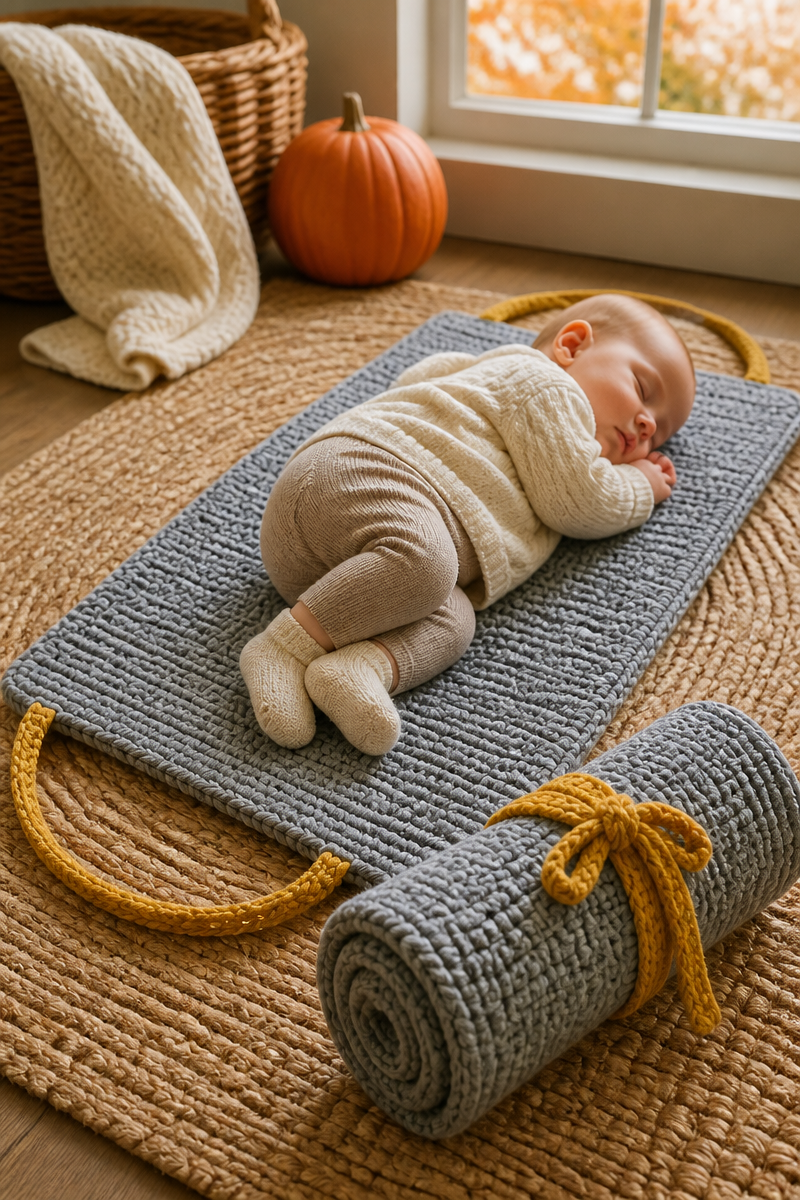
This baby nap mat roll features two soft, crocheted panels joined to encase a thin foam pad or quilting batting, providing a cozy, portable surface for naps. The design relies on straightforward single crochet in rows, producing a dense matte fabric that balances cushioning with durability. Mustard yellow tie straps add a practical and stylish finish. Using worsted weight yarn and a 5.5mm hook yields a sturdy but lightweight textile forgiving with wear and easy to clean.
The panels are sized precisely to fit a 20 x 40 inch pad, creating a flat rectangular mat that rolls neatly. The whipping stitch seam assembly ensures low bulk and durability, while the fully enclosed padded interior stabilizes the shape. The tie straps are narrow rectangles, long enough for secure closure but slim for easy handling. A contrasting color differentiates the functional ties from the gray sleeping surface, adding a modern touch without fuss.
Materials choices focused on soft acrylic worsted yarn for ease of washing and maintenance without sacrificing softness. A thicker cotton or wool blend would add warmth but could be more challenging to care for and heavier to carry. The foam insert provides a consistent cushion that quilting batting alone may lack, but the pattern accommodates either. This makes the mat ideal for childcare, travel, or floor naps at home.
Why You’ll Love This Nap Mat
The construction uses simple rectangle panels worked in single crochet—no shaping, no complex stitches—making it an accessible project that produces a practical, hard-wearing fabric. The whip-stitched join keeps seams slim and durable, preventing gaps or distortion around the foam core. Mustard tie straps, also crocheted, are long enough to secure the mat when rolled, combining function with a clean contrasting aesthetic. The finished mat folds compactly for ease of storage or travel.
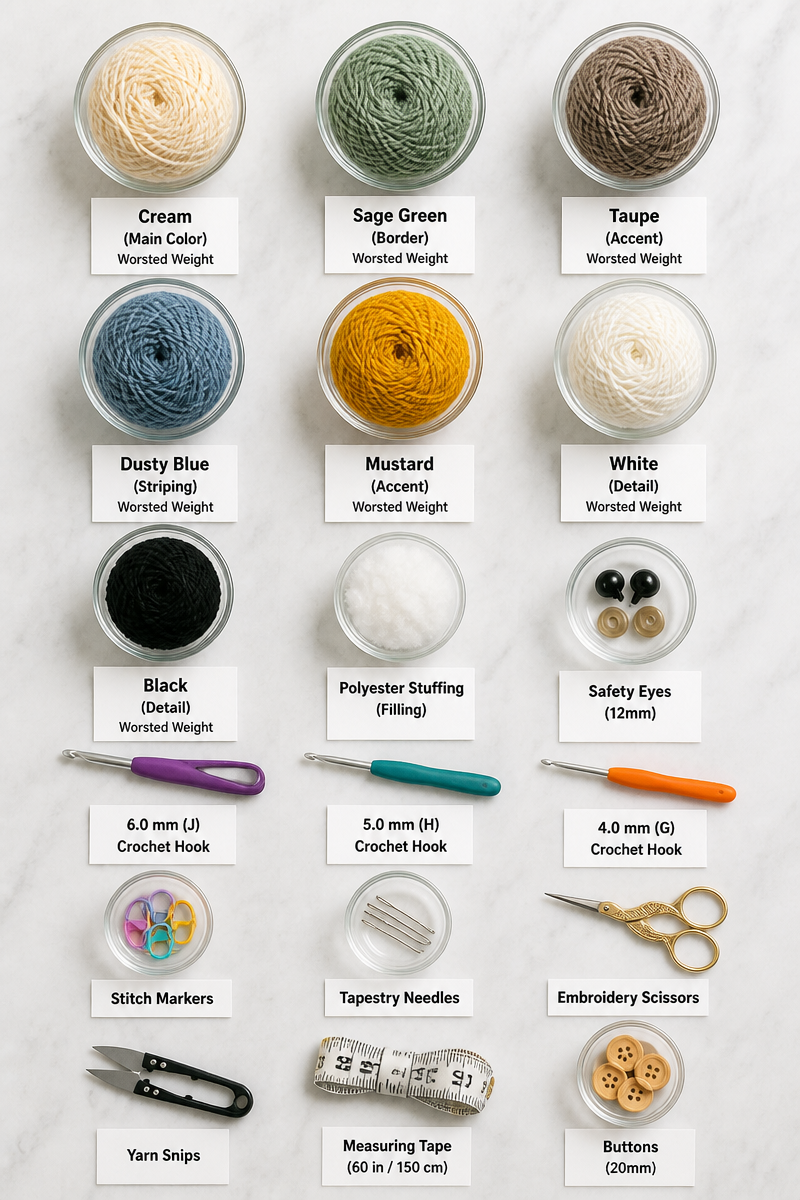
Materials
- 5.5mm (US I/9) crochet hook
- Worsted weight #4 yarn: approximately 300 yards soft gray, 50 yards mustard yellow
- Yarn needle
- 2 stitch markers (optional, for counting rows or marking edges)
- Thin foam pad or folded quilt batting approximately 20 x 40 inches
- Sewing pins for holding layers in place during assembly
Gauge
16 sts x 18 rows = 4″/10 cm in single crochet using worsted weight yarn and 5.5mm hook.
Finished Size
Flat mat: 20 inches wide x 40 inches long
Tie straps: 2.9 inches wide x 14.75 inches long (finished)
Special Stitches and Techniques
None: pattern uses only single crochet and whip stitch sewing.
Abbreviations
- ch = chain
- sc = single crochet
- st(s) = stitch(es)
- RS = right side
- WS = wrong side
Yarn Tips
The chosen worsted weight acrylic yarn offers a good balance of softness and durability. Its smooth fiber slides easily over the 5.5mm hook without excessive splitting or snagging. Maintain moderate tension to keep stitches consistent; too tight, and the fabric stiffens, making rolling the mat cumbersome. The acrylic blend resists pilling and holds color well, important for a frequently handled nap mat. Blocking after assembly is optional but can help flatten seams and smooth edges before adding the ties. Over time, the foam core will provide the main cushioning, so monitor wear on the yarn fabric for thinning or fuzzing in high friction areas.
Options for Substitutions
- Use a slightly smaller hook (5.0mm) with the same yarn for a denser fabric, less flexible but more durable.
- Substitute cotton worsted yarn for increased breathability and a cooler sleep surface, noting it may become stiffer.
- Use machine-washable wool blends for added warmth and resilience, but expect a longer dry time.
- Replace foam pad with multiple layers of quilt batting if a softer, less structured mat is preferred.
- Choose complementary or tonal yarn colors to match nursery themes or personal style.
- Swap mustard tie straps for a functional fabric ribbon or hook-and-loop tape closure for faster securing.
Nap Mat Panels (make 2)
With soft gray yarn, ch 80.
Row 1: Sc in 2nd ch from hook and in each ch across — 79 sts. Turn.
Rows 2-69: Ch 1, sc in each st across — 79 sts. Turn.
Fasten off at end of Row 69. Panels should measure approximately 20 inches wide by 40 inches long when blocked gently.
Tie Straps (make 2)
With mustard yellow yarn, ch 60.
Row 1: Sc in 2nd ch from hook and in each ch across — 59 sts. Turn.
Rows 2-59: Ch 1, sc in each st across — 59 sts. Turn.
Fasten off at end of Row 59. Straps should measure approximately 2.9 inches wide by 14.75 inches long.
Assembly
- Lay the two gray panels together with WS facing, aligning all edges precisely.
- Using gray yarn and a yarn needle, whip stitch three edges: both long sides and one short side, leaving the opposite short side open for inserting the foam pad or batting. Sew firmly, maintaining consistent tension to avoid puckering.
- Insert the foam pad or folded batting, smoothing it flat inside the pouch.
- Whip stitch the open short edge closed in the same manner as above.
- Center one mustard strap on the underside of each short end of the mat; sew securely along all edges of the strap to the panel, leaving no gaps. Position straps so they extend beyond the edge slightly for tying.
- Weave in all yarn ends neatly inside the seams.
Watch Out for These Mistakes
The most common error is miscounting foundation chains. The panel’s chain of 80, minus one for the starting stitch, must consistently yield 79 sts across each row. Misaligning stitch counts results in panels that don’t match exactly, causing uneven seams or gaps in assembly.
Do not skip the step of leaving one short end open for inserting the foam. Attempting to sew all edges closed before inserting the pad will force distortion or require undoing seams.
When whip stitching the panels together, keep tension firm but not tight. Too loose stitches allow the padding to shift; too tight causes puckering and reduces the nap mat’s overall smoothness.
Take care to sew the tie straps securely along all edges and centered on each short end’s underside. Weak attachment here causes straps to pull loose with use.
Blocking the panels before assembly smooths edges and makes stitching easier. Failure to block may cause parts to skew slightly in final assembly.
Care and Washing Instructions
Machine wash the finished nap mat on a gentle cycle with cold water. Use a mild detergent and avoid bleach or fabric softeners, which can degrade acrylic fibers. Lay flat to dry or tumble dry on low heat; removing the foam before washing is recommended to reduce distortion risk. Light blocking after washing restores shape if needed. Spot treat stains promptly to minimize wear on the fiber.
Questions About Making This Nap Mat
Q: Can I use a different yarn weight?
A: This pattern is sized for worsted weight yarn and a 5.5mm hook. Using a heavier or lighter yarn requires recalculating stitch counts and finished dimensions.
Q: Is the foam pad removable for cleaning?
A: The foam is enclosed but can be slipped out carefully by undoing the edge seam if needed. If frequent foam removal is desired, consider sewing only two sides and using a zipper or hook-and-loop closure.
Q: Can I make the mat larger or smaller?
A: Adjust the foundation chain in multiples of 1 stitch to scale width and the row count proportionally for length. Maintain the ratio to fit the insert pad accordingly.
Q: Would a thicker foam be better?
A: Thicker foam increases cushioning but may make rolling the mat more difficult. Choose padding thickness with portability in mind.
Q: How long do tie straps need to be?
A: The straps provided measure just under 15 inches, enough to wrap around the rolled mat and tie securely in a bow or knot.
Q: Can I use a single panel and fold it?
A: This affects the finished size and durability. Using two panels sewn around the foam provides stability and prevents shifting inside the mat.
Q: Is the whip stitch durable for this use?
A: Whip stitch is chosen for low bulk and strength; make sure to secure stitches tightly and work over all layers to maintain durability with regular use.
Rolling the mat flat for naps and securing with the ties keeps it compact for travel or storage. The clean lines and durable materials combine function with a simple aesthetic.
Feel free to share your finished mat and any customization details. Your adaptations help refine design and inspire future projects.