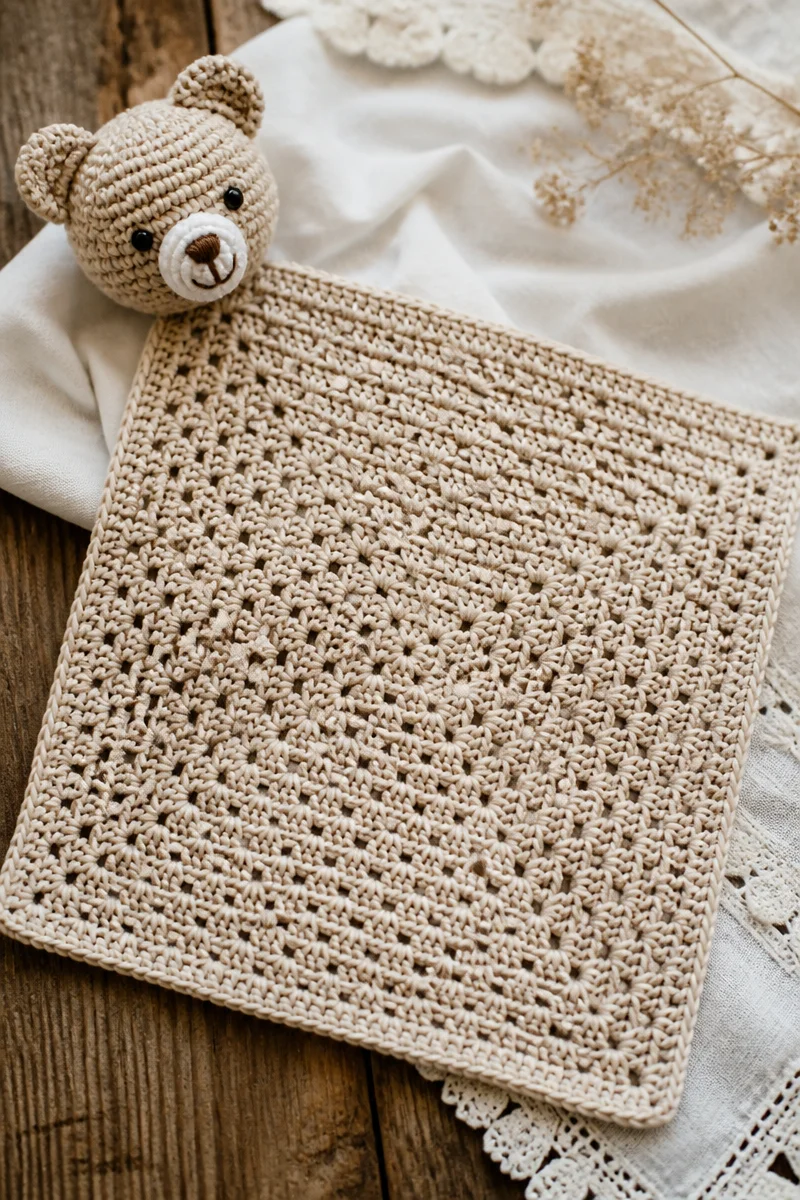
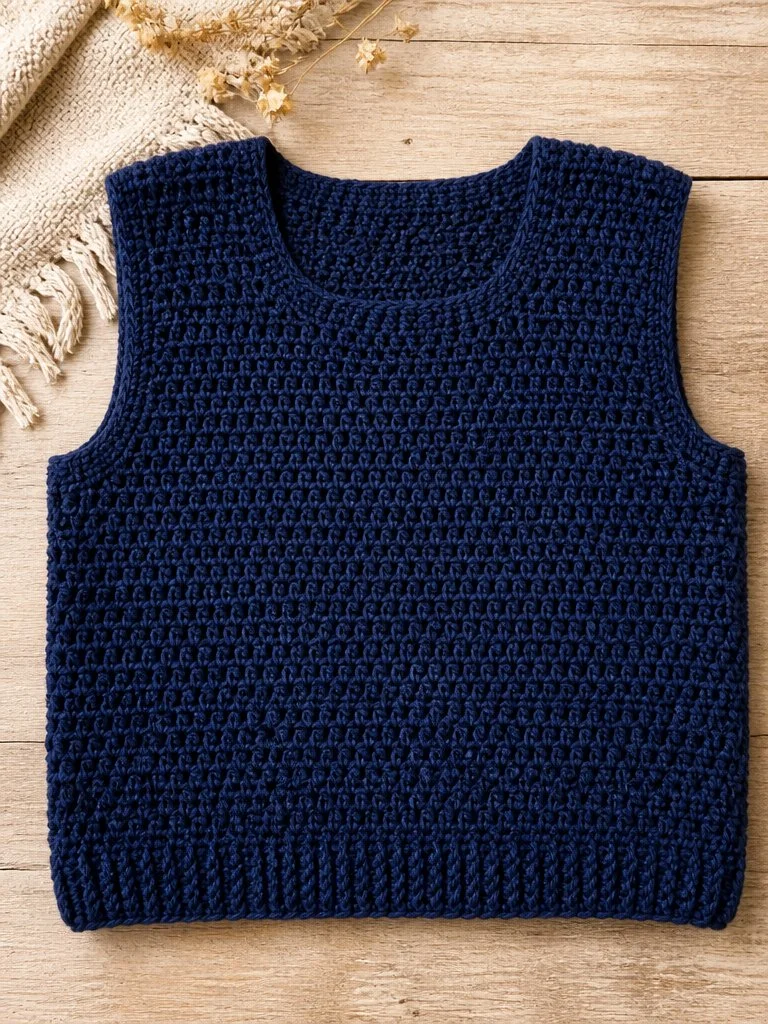
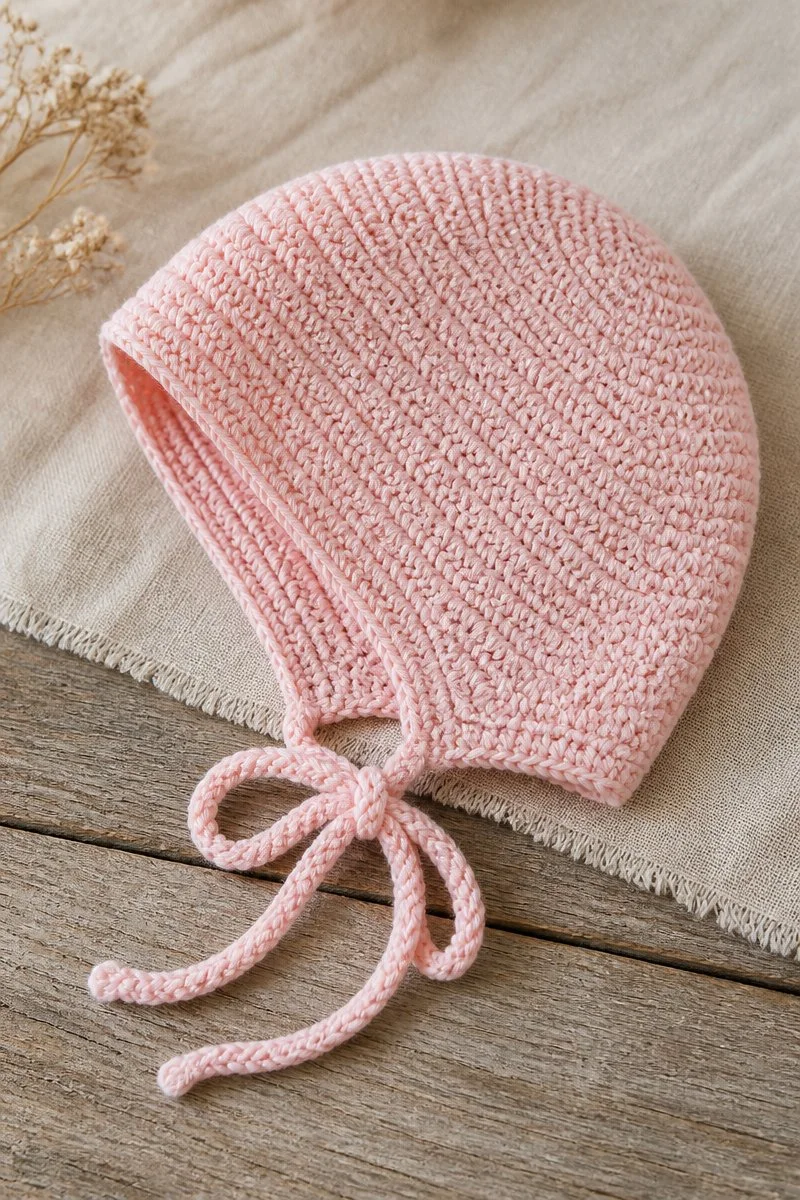
This baby blanket combines classic texture with a clean, modern finish. Its waffle stitch pattern creates a dense, softly raised fabric that provides warmth without added bulk. Worked flat in rows with a consistent stitch count, the blanket offers a stable structure ideal for fussy little sleepers and easy folding or swaddling.
The yarn choice—a worsted weight #4 acrylic-cotton blend—strikes a balance between softness, durability, and easy care, making it perfect for frequent washing and daily use in a nursery setting. The sage green color adds a subtle, gender-neutral calmness suited for any nursery palette. The simple two-round single crochet border keeps edges flat and tidy, avoiding loose fringe or tassels that could pose safety concerns for newborns.
Because the stitch pattern repeats evenly across rows, sizing and modification are straightforward. The pattern yields a blanket roughly 30 x 34 inches before the border, ideal for a crib or stroller cover. Its straightforward construction and stitch choice make it an excellent project for intermediate crocheters familiar with post stitches, offering textured interest without complexity.
Why You’ll Love This Waffle Stitch Baby Blanket
The waffle stitch offers a deep, tactile texture that’s warm yet breathable, making it excellent for all seasons. The acrylic-cotton blend lends durability and gentle softness, combining easy maintenance with natural fiber feel. Construction is a flat rectangle worked entirely in rows of half double crochets and front post double crochets, allowing for consistent stitch handling and balanced tension. The finishing border stabilizes the edges with two neat rounds of single crochet, maintaining a safe and flat edge suitable for newborn use.
Materials
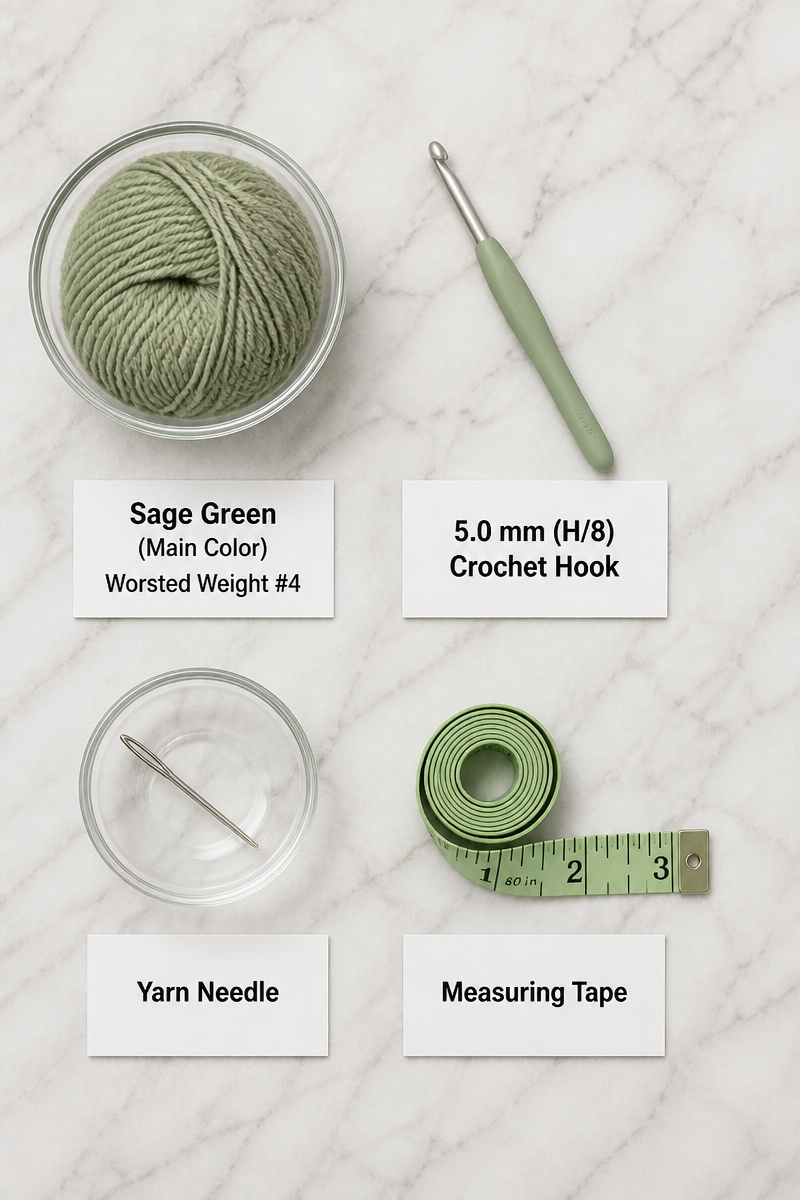
- Hook: US H/8 (5 mm) crochet hook.
- Yarn: Approximately 900g / 1800 yards worsted weight (#4) acrylic-cotton blend baby yarn in sage green.
- Notions: Yarn needle, measuring tape.
Gauge
13 stitches x 10 rows = 4 inches (10 cm) in waffle stitch pattern using the specified hook and yarn.
Finished Size
- Blanket body before border: 30 x 34 inches (76 x 86 cm).
- Blanket with border: approximately 30.5 x 34.5 inches (77.5 x 87.5 cm), after two rounds of single crochet border.
Stitch Multiple
Multiple of 2 stitches per row (due to alternating post and regular stitches in the waffle row), with foundation chain of 100 chains producing 98 stitches for row 1.
Special Stitches and Techniques
- Front Post Double Crochet (fpdc): Work a double crochet stitch by inserting the hook from front to back to front around the post (vertical post) of the stitch in the previous row instead of into the top loops. This creates raised ribs that form the waffle texture.
- Half Double Crochet (hdc): Yarn over, insert hook into stitch, yarn over, pull through stitch, yarn over, pull through all three loops on hook.
Abbreviations
- ch = chain
- hdc = half double crochet
- fpdc = front post double crochet
- sc = single crochet
- sl st = slip stitch
- st(s) = stitch(es)
- rnd = round
- row = row
Acrylic-Cotton Blend Yarn Tips
This yarn blend pairs the durability and washability of acrylic with the breathability and softness of cotton, delivering a pleasant hand that retains stitch definition well. The fiber blend tends to resist pilling compared to pure acrylic. The yarn’s slight elasticity aids tension control, but maintaining consistent tension is important because variations can disrupt the waffle texture’s evenness.
Because the yarn combines natural and synthetic fibers, it blocks pleasantly—wet blocking evens the stitch pattern and shapes the blanket to precise dimensions without overwhelming curl. It dries quickly and retains size well after several washes. The yarn’s baby-specific treatment means it is soft on sensitive skin but sturdy enough for hand or machine wash on gentle cycles.
Watch for initial slight fuzzing during early use, typical of cotton-blends, and avoid high heat when drying to preserve fiber integrity.
Options for Substitutions
- Use a 100% cotton worsted weight yarn for a more breathable, all-natural feel, ideal for warmer climates but expect less elasticity and a slightly more rigid texture.
- Substitute with a soft acrylic worsted for maximum washability and resilience, especially if baby wear-resistance is a priority.
- For a plusher finish, choose a cotton-bamboo blend; it softens with age and adds a subtle sheen.
- Opt for a sport-weight yarn held double with a smaller hook (e.g., 4 mm) to produce a lighter, smaller blanket suitable for spring/summer.
- Use a similarly weighted superwash wool blend for a warmer, naturally insulating blanket, adjusting hook size to maintain gauge.
- Swap the sage green for any fellow pastel or neutral baby color for theme coordination; adjust yardage minimally as color dyelots won’t affect stitch gauge.
Pattern
Blanket Body
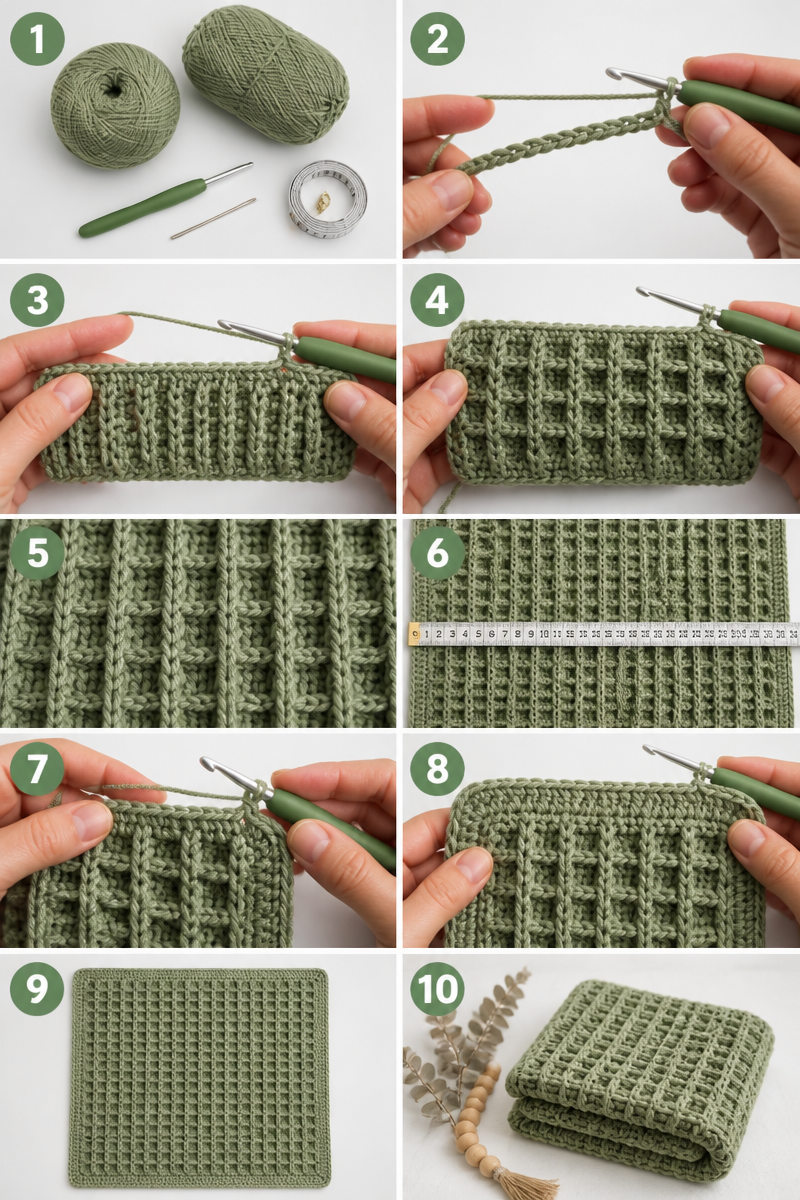
Ch 100.
Row 1: Hdc in 3rd ch from hook and in each ch across. (98 sts)
Row 2: Ch 2 (counts as first hdc here and throughout), turn, hdc in each st across. (98 sts)
Row 3 (waffle row): Ch 2, *fpdc around next st, hdc in next st; repeat from * across. (98 sts)
Rows 4–85: Repeat Rows 2–3, ending after a Row 2 repeat (hdc row). Fasten off.
Border
Join main color yarn at any corner.
Rnd 1: Ch 1, sc evenly around entire blanket edge, working 3 sc in each corner stitch to maintain flat edge, join with sl st to first sc.
Rnd 2: Ch 1, sc in each sc around, working 3 sc in each corner stitch, join with sl st. Fasten off.
Notes
- The foundation chain of 100 produces 98 stitches for the first row, matching the multiple of 2 stitch pattern.
- Corners increase by 3 sc to keep edges flat and prevent curling.
- Two rounds of sc edging soften the blanket edge without added bulk or fringe.
Assembly
Weave in all ends securely using a yarn needle. Wet-block the blanket flat to approximate final measurements (30.5 x 34.5 inches) to stabilize stitches and even the waffle texture. Pin edges square and allow to dry completely. No joining of separate pieces needed as the blanket is a one-piece flat rectangle.
Watch Out for These Mistakes
Maintaining the stitch multiple is critical: the waffle row always alternates fpdc and hdc, so foundation chain and row stitch counts must stay consistent in even numbers. Failure to maintain this will distort the pattern, causing uneven ribs and possible edge ripple.
Taking consistent tension on post stitches can be challenging. Avoid pulling too tight on fpdc rows; excessive tension compresses the waffle texture, and too loose leads to sagging fabric. Practice fpdc on scrap swatches for even height and elasticity before starting the blanket.
Skipping the corner increases on border rounds results in puckered or wavy edges. The specified 3 sc in corners evenly distributes added stitches to maintain flatness. Marking corners with stitch markers in the first round of border helps track where increases go.
Be cautious with yarn ends after border rounds: due to the stable edging, ends may be less obvious to weave in. Use a wool needle or tapestry needle with gentle weaving to avoid damaging the textured stitches.
Care and Washing Instructions
Machine wash gentle cycle in cold water; avoid bleach and fabric softeners to preserve fiber integrity and color. Lay flat or dry on a low setting—high heat may cause fiber distortion or shrinkage. Wet blocking after washing re-establishes the waffle texture and keeps the blanket square. The yarn’s blend dries quickly and resists matting with regular care.
Avoid hanging to dry, which can stretch the yarn and distort the waffle pattern. For spot cleaning, gently sponge with mild detergent and cool water.
Questions About Making This Waffle Stitch Baby Blanket
Q: Can I make this blanket larger or smaller?
A: Yes. The stitch multiple is 2, so increase or decrease foundation chain by multiples of 2 plus 2 additional chains for turning. Adjust row count proportionally to achieve desired length, maintaining the pattern repeat throughout.
Q: What if I don’t have a front post double crochet mastered?
A: Practice on a small swatch first. Insert your hook around the post of the stitch below from front to back to front, yarn over, and complete a double crochet as usual. Videos or photo tutorials for fpdc will clarify the motion.
Q: Can I use a different fiber?
A: Substitutions are possible—see the options section. Note that gauge may shift, and blocking characteristics change with fiber content.
Q: Is this pattern suitable for beginners?
A: It requires confident hdc and fpdc skills. Beginners comfortable with these stitches can work it, but some practice is advised before starting.
Q: Why no fringe or tassels?
A: Fringe and loops can pose safety risks in baby items. The flat, neat border keeps edges safe and durable.
Q: How should I store the blanket?
A: Fold flat in a dry area. Avoid compression near hard objects to maintain texture. Machine wash as needed without overwashing.
Q: How does blocking affect the waffle stitch?
A: Wet blocking evens the fabric, opens the waffle texture, and sets clean edges without compromising elasticity. It significantly improves the finished look.
Closing
Share your finished blanket and how the waffle stitch enriched your project. Seeing variations and color choices helps refine future designs and inspires others.